Supported MIATA models: NA8 models, NB models (except for NA6CE)
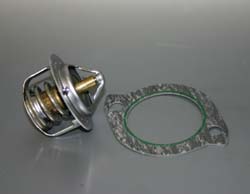
(Photo 1) Left: Maruha 78 Thermostat Right: Thermostat gasket (included)
Maruha 78 Thermostat, our hot-selling item in Japan where MIATA was born,
is the most suitable accessory for tuned cars.
The product has great advantage of circulating the coolant through a radiator to be cooled with its high lift valve in large diameter.
The valve is open fully at lower temperatures than the MIATA genuines.
A thermostat between the engine and the radiator has important functions in car cooling system by controlling the coolant temperatures, though it is a small accessory.
Picture 1 shows the water circulation in the radiator with the engine.
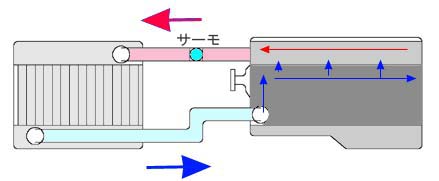
(Picture 1) Water circulation in the cooling system
The red arrows indicate that the heated coolant is sent to the radiator through the thermostat.
The blue arrows mean that the cooled coolant flows into the engine.
When the coolant is above a certain degree, the thermostat valve opens
to allow the water to flow into the radiator to be cooled down (in the
red arrows).
The thermostat blocks the coolant passages through the radiator until the engine warms up.
Once the engine is hot, the valve begins operating at a determined temperature and completely opens at about 100 degrees of Celsius.
The cooling water through the radiator is sent to the engine (in the blue arrows).
As the engine heats up, wax in the thermostat begins to melt and expand allowing the spring to push the valve open.
The wax is solid at lower temperatures.
The thermostat is a simple device, but it has a practical use for heat expansion.
Three different thermostats have been installed in normal MIATAs since 1989, when the small but stylish car was launched.
Changing the design and specifications is mainly related with global policies
to reduce greenhouse gas emissions.
Temperatures in combustion chambers have been raised and improved the combustion efficiency to fulfill the emission standards.
As the burning temperature is increased with an increase in coolant temperature, it is possible to reduce exhaust gas and to produce more power with less fuel consumption.
However, on the contrary, when the coolant temperature is low, the emission
tends to increase.
| Start operating temp(c) | full operating temp(c) | Rod stroke | valve diameter | |
| NA6CE | 82 | 95 | 8mm | 30mm |
| NA8Csub NA8Cmain |
85 88 |
100 | 1.5mm 4mm |
25.5mm |
| NB | 88 | 100 | 8mm | 31.5mm |
| 78Thermo | 78 | 90-92 | 10mm | 31.5mm |
Table 1 indicates that the 3 MIATA thermostats have improved the specifications
to achieve the environmental goals.
The NA6CE thermostat has a simple structure to control the coolant flow under common temperatures (Photo 2).
The NA8C, featuring the main and sub valves, has disadvantage of the water circulation because of the small valve diameters.
Besides the valves, the rod lengths are too short to send the coolant smoothly into the radiator (Photo 3).
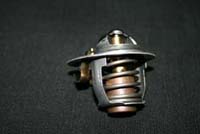
The NB brings several improvements in the opening temperature and in the valve diameter (Photo 4).

(Photo 2)The NA6CE thermostat
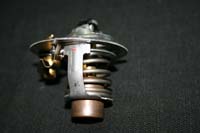
(Photo 3)The NA8C thermostat

(Photo 4)The NB thermostat
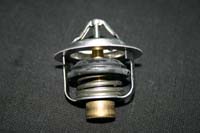
(Photo 5)Maruha 78 Thermostat
These specification changes are intended to achieve the engine performance in the stable burning temperatures.
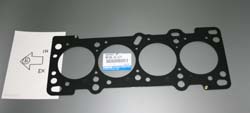
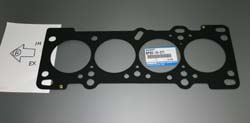
The head gasket as well as the thermostat play an
important role in keeping burning temperatures stabilized.
Photo 6 with MIATA genuine head gaskets for NA8C and for NB8 after M/C
shows that NB8 gains power with less number of water passage holes
on the gaskets.
The reduced holes can allow the combustion temperature to rise by decreasing
the water flowing through them.
When talking about thermostats, however, there is doubt that the genuine products have performed effectively in MIATA cooling systems.
MIATA NB thermostat has the valve off-centered from the center of the thermostat to make room for the jiggle valve to let out air bubbles (Photo 7).
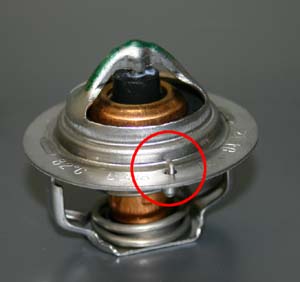
(Photo 7) The genuine MIATA NB thermostat
The red circle shows the jiggle valve.
Furthermore, the thermostat housing includes the off-centered water passage
to help the thermostat valve to connect the housing with the passage center
line.
The ideal is that the centers of the valve and of the water passage are
arranged in a line, though the NA8C thermostat cannot send the coolant
smoothly as the minimum-sized main valve is extremely off-centered to place
the sub.
Photo 8 indicates that the NA8C thermovalve is too off-centered to set
to the center of the water channel.
Solving the inconvenience, the NB thermostats have been changed to simple
specifications by replacing sub valves.
In summary, an ideal thermostat has the characteristics as follows: 1) the centers of the valve and of the water neck are arranged in a line 2) the large valve diameter to supply more water to the radiator 3) more rod length 4) lowering the opening temperature to avoid engine failures
Maruha 78 Thermostat features the former characteristics (Photo 5).
It is considered that, in general, a low temperature thermostat wastes fuel through reducing burning efficiency in the engine.
However, Maruha's product has the advantage of increasing the radiator's
cooling capacity to avoid knocking of the engine with maintaining the burning
efficiency under sports driving conditions.
Maruha 78 Thermostat is named for its opening temperature at 78 degrees
(c), which provides the stable engine performance with the excellent cooling
capacity in sports driving.
The product is designed to start opening the valve at about 5 degrees (c)
- 10 degrees (c) lower than the MIATA genuine one.
In view of cooling performance, the NA6CE thermostat is better than the
other genuine ones, though the specs are inferior to Maruha's.
By comparing Photo 2 and Photo 5, you can see that there is a large difference in the rod lengths between them.
The NA6CE has 8 mm, while Maruha 78 Thermostat has 10 mm clearance.
Furthermore, Maruha's product has the 31.5 mm diameter valve that opens fully at 92 degree (c) and the 10 mm long rod allows more water to flow into the radiator.
These features enable the radiator to perform effectively and to increase
the cooling performance in severe driving conditions.
As mentioned earlier, a low temperature thermostat is considered as a disadvantage,
despite the fact that higher water and combustion temperatures have chance
to cause knocking in poor engine output power.
Maruha 78 Thermostat has an excellent design that allows to circulate more coolant and
keeps your car in top condition by maximizing the radiator's cooling performance.
[NOTE]
This product should be installed by a professional.
[NOTICE]
This product CANNOT BE USED in NA6CE without the special adapter (sold separately), as there is interference between Maruha 78 Thermostat and the NA6CE thermostat housing.
For further information about the adaptor kit for NA6CE model only, please visit Maruha 78 Thermostat for NA6CE Water Temperature Gauge page.
[home]